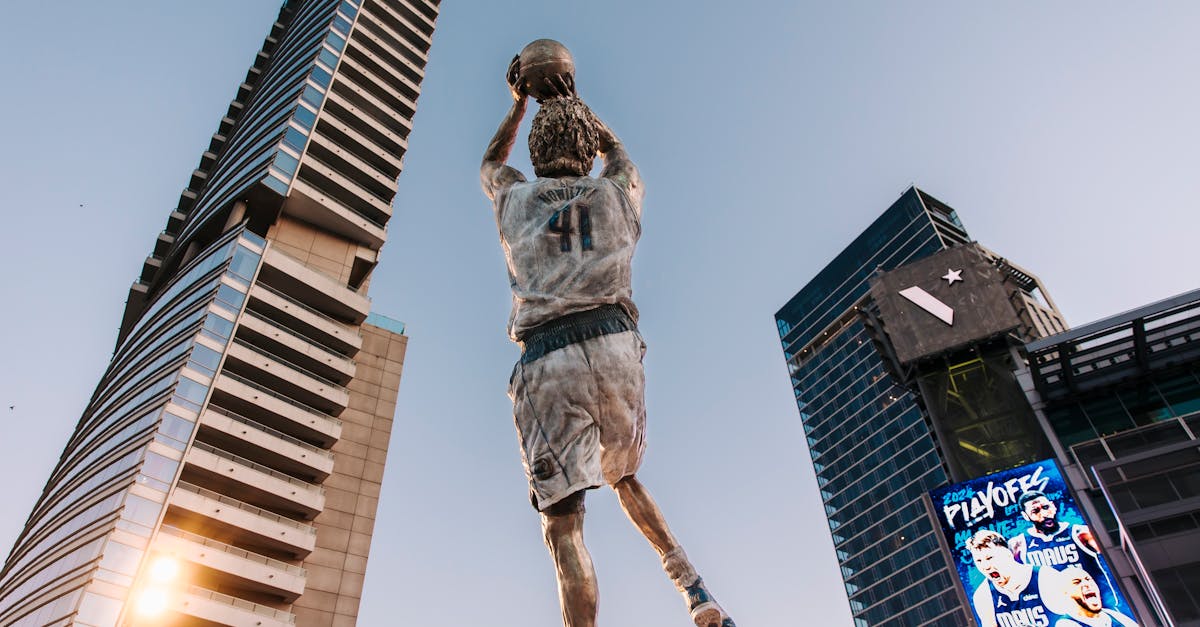
Long before he became one of the most recognizable figures in NBA history, Dirk Nowitzki was a tall, awkward teenager growing up in southern Germany, far removed from the bright lights of American basketball. His pre-NBA years are often summarized quickly, but they reveal something essential: Germany didn’t just discover Nowitzki — it patiently built him, piece by piece, into a unique basketball mind and body.
Nowitzki was born in Würzburg in 1978 into a sports-oriented family. His mother was a national-level handball player, and his father played handball as well, so athleticism and discipline were part of his environment from an early age. Still, basketball was not Germany’s primary sport in the 1990s. Football dominated, and elite basketball infrastructure lagged far behind that of the United States or Yugoslavia. That context makes Nowitzki’s rise even more remarkable.
As a teenager, Dirk joined the youth setup of DJK Würzburg, a modest club without grand expectations. At first glance, he didn’t look like a future superstar. He was extremely tall but lacked muscle, coordination, and confidence. What set him apart was not dominance, but curiosity. He was willing to learn, experiment, and repeat movements endlessly, a trait that would define his career.
The pivotal moment in Nowitzki’s development came when he met Holger Geschwindner, a former national team player with unconventional ideas. Geschwindner didn’t believe in rigid positional roles. Instead, he saw geometry, physics, and creativity as the foundations of basketball. Under his guidance, Nowitzki trained in ways that were unheard of at the time: shooting drills based on angles, balance exercises borrowed from other sports, and repetitive skill work focused on efficiency rather than raw athleticism.
This approach allowed Nowitzki to grow into something basketball had rarely seen. Instead of being molded into a traditional European center, he was encouraged to handle the ball, shoot from deep range, and attack off the dribble. His famous one-legged fadeaway, which later baffled NBA defenders, was already taking shape during these years as a practical solution to his slim frame and high release point.
By the late 1990s, Nowitzki was playing professionally in Germany’s top division, the Basketball Bundesliga. Against grown men, he wasn’t physically overpowering, but his skill level stood out. He could stretch defenses with his shooting and make smart decisions under pressure. Scouts began to notice not just his height, but his basketball intelligence — an attribute often overlooked in draft evaluations of the era.
International play further accelerated his development. Representing the Germany national basketball team exposed him to different styles and higher levels of competition. Facing experienced European veterans taught him patience, positioning, and mental toughness. These tournaments also forced him into leadership roles earlier than most players his age, shaping the calm, understated demeanor that later defined his NBA presence.
What’s often forgotten is that Germany never rushed Nowitzki. There was no attempt to turn him into a spectacle or force an early jump overseas. Instead, he was allowed to fail, adjust, and mature in a supportive environment. That slow, methodical development gave him something invaluable when he finally entered the NBA: a complete understanding of his own game.
By the time Dirk Nowitzki crossed the Atlantic, he wasn’t a raw prospect chasing potential. He was already a fully formed basketball thinker, carrying with him years of deliberate training, international experience, and a uniquely European vision of the sport. Germany didn’t just produce an NBA star — it quietly engineered one, long before the world was watching.